anticipate(見込む・予期する)は動名詞を目的語にとる動詞。〈anticipate + doing〉のかたまりで覚える。to不定詞(②)や、前置詞つきの形(③④)は使えない。
📌 このページの使い方
- 過去問集をお持ちの方:本番と同じ80分で解き、答え一覧で採点してから解説へ
- お持ちでない方:各設問の「どういう問題か」を読めば、問題の中身がそのまま分かります
- 最後にそっくり類題セット(PDF版あり)を80分で解き、初見でも同じ解き方ができるか確かめる
※ 著作権に配慮し、入試問題の本文・図は掲載していません。解答番号や問番号は、本番の解答欄との対応を示すためのものです。※ 過去問集では第4問・第5問の英文が著作権の都合で省略されています。この2題は、出典として示されている公開記事を確認して答えを導きました。本文を全部は確認できない設問には「要確認」を付けています。
⚠️ 問題等で誤りを発見された場合、修正しますので、TMPS医学館までLINEを下さい。(迅速に確認・更新いたします)
LINEで誤りを連絡3分で分かる 2026年度の国際医療福祉大の英語
- ✅ 全5大問・解答番号1〜50、試験時間は80分。すべてマーク式で、記述(和訳・英作文)はありません。
- ✅ 第1〜3問は「知識の即答」。空所補充(文法・語法)10問、語句の並べ替え5問(各2空所)、文中の誤り探し5問。ここを26分で終えるのが目標です。
- ✅ 第4・5問の長文が、解答番号の半分(25問)を占めます。空所補充・同意表現・内容一致に加え、第5問には段落を戻す問題と8つから3つ選ぶ内容一致が出ます。
- ✅ 差がつくのは「時間配分」と「迷う問題の切り方」。長文に46分を残し、迷う問題には印をつけて先へ進みます。

Yuiちゃん
短い問題が多いのに、長文は2つもあって大変そうです…。
Mio先生
前半の知識問題を速く正確に終わらせれば、長文に時間が回るよ。まず80分の使い方を決めよう!
ニックニ先生
前半で1問に1分以上かけないこと。分からない問題は印をつけて先へ。後半の長文で取り返せる時間のほうが大きいです。80分の立ち回りマップ
時間はTMPSの目安です。解く順番と「捨てどころ」をセットで覚えておきましょう。
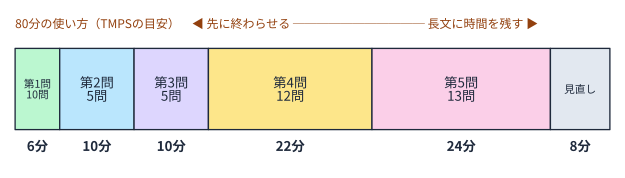
第1問 空所補充(10問)
迷ったら飛ばす
6分
第2問 整序(5問)
骨格から作る
10分
第3問 誤り指摘(5問)
1段落2分
10分
第4問 長文(12問)
設問から先に見る
22分
第5問 長文(13問)
挿入は最後に
24分
🧭 おすすめの解く順番
第1問 → 第2問 → 第3問(ここまで26分)→ 第4問 → 第5問 → 見直し8分
前半の3題は、1問あたり約1分が目安です。第5問の段落挿入(46・47)と3つ選ぶ内容一致(48〜50)は、時間が足りなければ最後に回し、先に空所補充と同意表現を取りましょう。
第1問 文法・語法の空所補充 ── 1問1分、根拠は空所の前後だけ
短い1文の空所に、4つの選択肢から最も適切なものを選ぶ問題が10問。文法(動名詞・倒置・関係詞)と語法・熟語が混ざります。
現場戦略試験会場でのリアルな立ち回り(第1問)
⏱ 目標時間 & 死守ライン目標6分(1問あたり約36秒)。10問のうち、迷って30秒を超えたものは印をつけて先へ。第2問に進んでから戻る。
⚠️ 損切り・警戒ライン4択のうち2つに絞れても決まらない問題は、印をつけて飛ばす。第1問で3分以上かけると、長文の時間が削れる。
💡 初手の思考トリガー選択肢を見たら、まず品詞と形(動名詞か、不定詞か、前置詞か)を確認。意味はそのあとで確かめる。
Yuiちゃん
知らない熟語だと、固まってしまいます…。Mio先生
空所の前後の形から先に決めよう。形が合わない選択肢を消せば、半分は消えるよ。ニックニ先生
知らない問題に粘らない。ここで落としても致命傷ではなく、悩んだ時間のほうが痛いです。問1動詞のあとの形
📝 どういう問題か?
「新しい建物の完成を見込む」という文で、空所に入る形(動名詞か不定詞か)を4択から選ぶ。
🎯 問1 の答え
① completing
問2熟語の前置詞
📝 どういう問題か?
体調不良で欠勤した人に代わって会議に出てほしい、という文。空所の前置詞を4択から選ぶ。
〈call in sick〉=「病気で休むと連絡する」。in が熟語の一部。他の前置詞(for / on / under)では熟語にならない。
🎯 問2 の答え
② in
問3倒置による条件
📝 どういう問題か?
「さらに情報が必要なら、お客様窓口に連絡を」という案内文。文頭の助動詞を4択から選ぶ。
〈Should you require ...〉は〈If you should require ...〉の if を省いて倒置した形で、ビジネス文書の定番。後ろの命令文(please contact)と呼応する。Did や Would では「条件」の意味にならない。
🎯 問3 の答え
③ Should
問4群れの名詞
📝 どういう問題か?
大きな水槽で速く泳ぎ、群れをつくるイワシを描写する文。「群れ」を表す名詞を4択から選ぶ。
群れの名詞は動物ごとに決まっている。魚=a school of、鳥=a flock of、オオカミ・犬=a pack of、牛・羊=a herd of。chunk(かたまり)は「群れ」の意味では使わない。
🎯 問4 の答え
① a school of
問5形容詞+to不定詞
📝 どういう問題か?
景気がよい時期に、消費者が高級品に多くお金を使う傾向がある、という文。空所に入る形容詞を4択から選ぶ。
〈be disposed to do〉=「〜しがちである、〜する傾向がある」。accustomed は〈accustomed to doing〉の形で後ろが -ing になるので、後ろが to spend の本問では不適。committed・condemned も意味が合わない。
🎯 問5 の答え
③ disposed
問6関係代名詞
📝 どういう問題か?
複数の歴史的出来事についてエッセイを提出したが、そのどれも深い理解を示していなかった、という文。空所に入る語を4択から選ぶ。
空所のあとに動詞(demonstrated)が続き、前の名詞(essays)を受けて文をつなぐ必要があるので、〈none of + 関係代名詞 which〉。them や those では、文が2つ並んで接続の働きをしない。
🎯 問6 の答え
④ which
問7第4文型の動詞
📝 どういう問題か?
会社が社員に、試用期間中の在宅勤務の機会をどうしたか、を表す動詞を4択から選ぶ。
〈deny + 人 + もの〉=「人にものを与えない」。「機会を与えなかった」という文脈に合うのは denied。rejected は人を目的語にして2つ目の名詞をとれない。
🎯 問7 の答え
② denied
問8熟語(前置詞句)
📝 どういう問題か?
SNSが中心の社会で、個人の評判が一時的な世論にどうなるか、を表す前置詞句を4択から選ぶ。
〈at the mercy of ...〉=「〜のなすがまま」。評判が移ろいやすい世論に左右される、という文意に合う。in the wake of(〜の結果として)や on the brink of(〜の寸前)は意味が合わない。
🎯 問8 の答え
④ at the mercy of
問9熟語(動詞句)
📝 どういう問題か?
気候変動への関心が高まるにつれ、持続可能な暮らしがどうなったか、を表す動詞句を4択から選ぶ。
〈has taken hold〉=「根づいた、定着した」。set the tone(雰囲気を決める)、broke ground(着工した)、turned the page(新しい局面に入った)は、主語の sustainable living と意味が合わない。
🎯 問9 の答え
① taken hold
問10形の似た語
📝 どういう問題か?
ハリケーンで出たごみの量が多く、市が追加の収集日を設けた、という文。空所に入る語を4択から選ぶ。
名詞の refuse(ごみ)。refuge(避難所)、refugee(難民)、refusal(拒否)と形が似ているが、「ごみの量」になるのは refuse だけ。名詞の refuse は「レフュース」とアクセントが前にある。
🎯 問10 の答え
② refuse
ニックニ先生の総整理表
第1問:設問タイプ別の着眼点
| 型 | 問 | 着眼点 |
|---|---|---|
| 動詞の形(動名詞・不定詞) | 問1 | 動詞ごとに続く形が決まっている(anticipate doing など) |
| 熟語・前置詞 | 問2・8・9 | かたまりで覚える(call in sick / at the mercy of / take hold) |
| 倒置・関係詞 | 問3・6 | if の省略(Should you ...)、前置詞+which |
| 語彙 | 問4・5・7・10 | 群れの名詞・形容詞の語法・第4文型・形の似た語 |
TMPSコーチング診断
🩺【自己診断】第1問で手が止まった人への処方箋
- 問1・5・7動詞・形容詞の「後ろの形」が不安 → 動詞ごと〈suggest doing / be disposed to do / deny 人 もの〉と形で覚え直す
- 問2・8・9熟語が出てこない → 前置詞だけでなく、動詞や名詞を含めた「かたまり」で音読して覚える
- 問3・6倒置・関係詞で迷う → 空所の後ろに動詞があるか、主語があるかを先に見る
- 問4・10語彙が決まらない → 動物ごとの群れの名詞、形の似た語(refuse / refuge / refusal)を一覧にして覚える
第2問 語句の並べ替え ── 8つ全部並べてから、番号の場所だけ答える
日本文に合うように、8つの語句①〜⑧を並べ替えて英文を完成させる問題が5問。マークするのは、解答番号のついた2か所だけですが、全部を並べないと正解は分かりません。
現場戦略試験会場でのリアルな立ち回り(第2問)
⏱ 目標時間 & 死守ライン目標10分(1問2分)。5問すべてを「骨格を決める → かたまりを作る → 全部並べる」の順で。
⚠️ 損切り・警戒ライン1問で3分かけたら、番号の2か所だけでも決めて次へ。空欄にしない。
💡 初手の思考トリガー日本文から骨格(動詞・構文)を先に決める。語句の中の〈前置詞+which〉〈as difficult〉のような「くっつく組」を先に作る。
Yuiちゃん
8つも並べるのは大変です…。Mio先生
まず日本文を主語・動詞・修飾に分けよう。構文(how likely ... / still less ... / by which ...)が見えれば、あとは自然に決まるよ。ニックニ先生
番号の2か所だけ見て決めるのは危険です。必ず全部を声に出して並べ、文として成立するか確かめましょう。問1解答番号 11・12
📝 どういう問題か?
「医療の専門家が、過去の統計を使って、がん患者が診断後少なくとも5年生存する可能性がどのくらいかを計算する」という日本文に合わせて、8つの語句から並べて空所を埋める。
- 番号つきの空所は、前から3番目(11)と6番目(12)。「がん患者」= people with cancer の語順に注意。
構文の骨格:骨格は〈calculate + 疑問詞のまとまり〉。「どのくらい〜しそうか」は〈how likely + S + be to do〉。
完成した語順:how | likely | people | with | cancer | are | to | live
🎯 問1(解答番号 11・12) の答え
11=people(③)、12=are(①)
問2解答番号 13・14
📝 どういう問題か?
「戦略に大きな変更を加えるのは難しいけれども、チームにとって正しい決断だと信じている」という日本文に合わせて並べる。
- 「as difficult」を1つのかたまり(④)として扱う。make の後ろに significant changes と続け、to our strategy へつなぐ。
構文の骨格:譲歩の〈as difficult as it is to do〉(〜するのは難しいが)。it は形式主語で、to 以下が真の主語。
完成した語順:as difficult | as | it | is | to | make | significant | changes
🎯 問2(解答番号 13・14) の答え
13=as(③)、14=make(⑤)
問3解答番号 15・16
📝 どういう問題か?
「人類の進化とは、類人猿の祖先から人類が生まれた長い変化の過程を指す」という日本文に合わせて並べる。
- 〈前置詞 + which〉のあとは、完全な文(people originated from ...)が続く。
構文の骨格:骨格は〈S is the lengthy process of change〉。「その過程によって」は〈by which〉で後ろから説明する。
完成した語順:is | the lengthy process | of | change | by | which | people | originated from
🎯 問3(解答番号 15・16) の答え
15=of(⑦)、16=which(①)
問4解答番号 17・18
📝 どういう問題か?
「そのプロジェクトの成功は、市場動向や顧客行動といった外的要因に大きく依存するため、当然のこととして受け取るべきではない」という日本文に合わせて並べる。
- not の後ろは原形 be。〈take A as a given〉の受け身で be taken as a given。considering that it depends ... とつながる。
構文の骨格:骨格は〈should not be taken as a given〉(当然のこととして受け取られるべきではない)の受け身。後半は〈considering that + S + V〉。
完成した語順:be | taken | as | a | given | considering | that | it
🎯 問4(解答番号 17・18) の答え
17=taken(⑥)、18=given(④)
問5解答番号 19・20
📝 どういう問題か?
「彼は面接で最も簡単な質問にも答えられなかった。ましてや、自分の資格について詳しく説明することなどできるはずもなかった」という日本文の後半部分に合わせて並べる。
- still less のあとは could he の倒置。provide detailed explanations about ... で締める。
構文の骨格:否定のあとの〈still less + 助動詞 + 主語〉(まして〜ない)の倒置。
完成した語順:still | less | could | he | provide | detailed | explanations | about
🎯 問5(解答番号 19・20) の答え
19=he(④)、20=detailed(⑥)
ニックニ先生の総整理表
第2問:構文の型
| 問 | 構文 | 押さえる点 |
|---|---|---|
| 問1 | how likely S are to do | 「どのくらい〜しそうか」は間接疑問の語順 |
| 問2 | as difficult as it is to do | 譲歩。形式主語の it |
| 問3 | 前置詞 + which | 先行詞のあとに続く完全な文 |
| 問4 | be taken as a given | 受け身。not の後ろは原形 be |
| 問5 | still less could he ... | 否定の後の倒置(まして〜ない) |
TMPSコーチング診断
🩺【自己診断】第2問で手が止まった人への処方箋
- 問1・5文頭から並べて詰まる → 日本文を〈主語・動詞〉に分け、疑問詞や倒置のまとまりを先に作る
- 問2・3〈as ... as〉〈前置詞+which〉が見えない → 「くっつく組」を先にカードのように作ってから並べる
- 問4受け身の形が崩れる → 〈should not be p.p.〉と先に枠を書く
- 全般全部並べず、番号の2か所だけ決める → 必ず8つ全部を文として読み直す
第3問 文中の誤り探し ── 4つの下線から、間違いを1つだけ見つける
5つの段落には、それぞれ下線部が4つ(①〜④)あり、そのうち1つだけに誤りがあります。下線の文の中に、形・語法・呼応・論理のいずれかの誤りがあるので、見つけてマークします。話題は「人の顔や頭の形から性格を読む」という昔の考え方(人相学・骨相学)です。
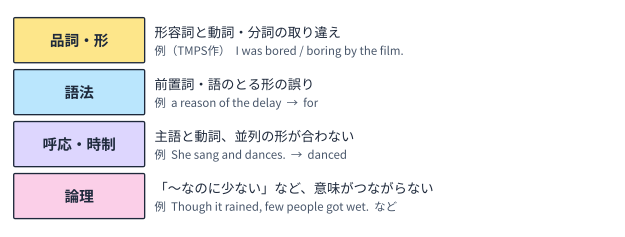
現場戦略試験会場でのリアルな立ち回り(第3問)
⏱ 目標時間 & 死守ライン目標10分(1段落2分)。1文ずつ、主語と動詞の形、前置詞、並列の形を確かめる。
⚠️ 損切り・警戒ライン2分たっても見つからない段落は、論理(意味のつながり)の誤りを疑う。それでも決まらなければ印をつけて先へ。
💡 初手の思考トリガー内容を理解しようとせず、文法のチェックリスト(主語と動詞の一致・時制・前置詞・並列・相関表現)で下線を順に確認する。
Yuiちゃん
4つとも正しそうに見えて、決められません…。Mio先生
意味ではなく形から見よう。「主語は単数か複数か」「前置詞は合っているか」「動詞の形は並んでいる語と同じか」を順番に。ニックニ先生
5段落で10分。1段落は2分で切ります。見つからなければ「論理の誤り」と決めて、前後のつながりだけを確かめて次へ。21誤りの種類:品詞・形(形容詞と分詞)
📝 どういう問題か?
人の見た目に対する第一印象(外見と性格の関係)を述べる段落。
①の「afraid of or attractive to someone」。afraid of と並んでいるので「〜に魅力を感じる」の意味にしたい。attractive は「魅力的な」で、人が主語のときは「魅力を感じさせられた」を表す過去分詞 attracted(to)が正しい。
🎯 21 の答え
① attractive → attracted
22誤りの種類:語法(他動詞)
📝 どういう問題か?
古代から行われてきた「人相学」で、顔の特徴を動物にたとえた話の段落。
②の「animals they resembled to」。resemble(似ている)は他動詞で、前置詞 to を置かずに直接目的語をとる。resembled の後ろの to が余計。
🎯 22 の答え
② resembled to → resembled
23誤りの種類:呼応(三単現)
📝 どういう問題か?
人相学者が見る顔の特徴(頭の形・首・髪・鼻・目・あごなど)と、それが示す性格を並べる段落。
④の「someone who like to give orders」。関係代名詞 who の先行詞は単数の someone なので、動詞は三単現の likes。同じ段落の他の文は、動詞の形が主語と合っている。
🎯 23 の答え
④ who like → who likes
24誤りの種類:構文(相関表現)
📝 どういう問題か?
人相学に関連して、頭のこぶから性格を読む「骨相学」を説明する段落。
②の「not so much interested in health that they were in character」。「Aというよりむしろ B」は〈not so much A as B〉。that ではなく as が正しい。
🎯 24 の答え
② ... health that they were → ... health as they were(not so much A as B)
25誤りの種類:論理(譲歩の流れ)
📝 どういう問題か?
骨相学を考案した医師の経歴と、その後の流行・現在の状況でしめくくる段落。
④の「there are still few phrenologists even though there is no scientific evidence」。「証拠がないのに」という譲歩(even though)に対して、「まだ信奉者が少ない」では因果がつながらない。「それでもまだ(いる)」の意味にする必要がある。他の3つの下線部には、形や語法の誤り候補が見当たらないため、消去法でも④が残る。
🎯 25 の答え
④ still few phrenologists → 「それでもまだいる」の意味に直す
ニックニ先生の総整理表
第3問:誤りのタイプ別チェック
| タイプ | 解答番号 | 見分け方 |
|---|---|---|
| 形(形容詞と分詞) | 21 | 人が主語の感情動詞は過去分詞(attracted / interested) |
| 語法(他動詞) | 22 | resemble / marry など、前置詞を置かない動詞 |
| 呼応 | 23 | 関係代名詞の動詞は先行詞に合わせる |
| 構文(相関表現) | 24 | not so much A as B |
| 論理 | 25 | 譲歩(even though)と主節の意味が逆になっていないか |
TMPSコーチング診断
🩺【自己診断】第3問で手が止まった人への処方箋
- 21・234つとも正しく見える → 主語と動詞の一致、感情を表す動詞の形(-ing / -ed)を先にチェック
- 22前置詞を足したくなる → resemble / discuss / enter など、前置詞を置かない他動詞を一覧にして覚える
- 24相関表現が見抜けない → not so much A as B / not only A but also B を日本語と一緒に暗唱
- 25文法は正しいのに違和感がある → 接続詞(even though など)の前後が逆の内容になっていないかを確かめる
第4問 長文(古代ローマの鉛汚染)── 設問を先に読み、根拠の1〜2文を探す
古代ローマの時代に、鉛(精錬の際に出る)が大気を通じて人々の健康や知能に影響した可能性を調べた研究を紹介する記事です。設問は、空所補充(3問)・下線部の同意表現(4問)・内容の完成(4問)・タイトル(1問)の計12問です。
⚠️ この大問の英文は、過去問集には載っていません(著作権の都合で省略)。TMPSは、出典として示されている公開記事(NBC News、2025年1月7日付)の内容と選択肢から答えを導きました。全部の根拠を本文で確かめられたわけではないので、(6)=28は「要確認」として扱います。
現場戦略試験会場でのリアルな立ち回り(第4問)
⏱ 目標時間 & 死守ライン目標22分。まず設問と選択肢を2分で眺めてから本文へ。同意表現(29〜32)を先に、内容の完成(33〜36)は本文を段落ごとにつぶして答える。
⚠️ 損切り・警戒ライン空所(6)のように、数値や割合の関係を問う問題で決まらなければ、印をつけて内容の完成を先に解く。
💡 初手の思考トリガー同意表現は、その語が出てくる文の前後だけを読んで、言い換えを選ぶ。本文全体を読み直さない。
Yuiちゃん
知らない単語(unambiguous や invigorate)が出てきたら、どうすればいいですか?Mio先生
単語そのものより、前後の文がプラスかマイナスかを見よう。分からなければ、接頭辞(un- は否定、-ous は形容詞)から意味を絞れるよ。ニックニ先生
内容を問う設問は、選択肢の「言い切りの強さ」にも注意。always / only / all が入っている選択肢は、まず疑います。問1空所(1)・(4)・(6)=解答番号26〜28
📝 どういう問題か?
本文中の3か所の空所に、4つの選択肢から最も適切なものを選ぶ。
- (1)=26:名詞を選ぶ(栄養・認知・移動・呼吸)
- (4)=27:-ing 形の動詞(圧縮・節約・処理・切る)
- (6)=28:割合を表す語句(3分の1・半分・4分の1・2倍)
(1)=26:② cognition。鉛は神経に作用する毒性がある。この記事の主題は、鉛が人々の知的な働き(認知能力)に影響したかどうかなので、cognition(認知)が合う。nutrition(栄養)、migration(移動)、respiration(呼吸)は、鉛の影響の対象として本文の主題と合わない。
(4)=27:③ processing。鉛が出る場面は、銀などの鉱石を精錬する処理の過程。compressing(圧縮)、saving(節約)、slicing(切る)は、鉱石から金属を取り出す工程を表さない。
(6)=28:要確認(①か④)要確認。選択肢は a third / half of / a quarter of / twice。本文が省略されているため、原典記事の記述から①(3分の1)か④(2倍)のどちらかまで絞ったが、数値の根拠を本文で確かめられていない。文脈が「推計は実際より低めかもしれない」なら twice 側、「…の一部にとどまる」なら a third 側。
🎯 問1 の答え
26:② cognition27:③ processing28:要確認(①か④)
問2下線部(2)・(3)・(5)・(7)の意味=解答番号29〜32
📝 どういう問題か?
下線の語句の、本文中の意味に最も近い言い換えを4択から選ぶ。
- (2)=29:remains a public health menace today(今も公衆衛生上の脅威であり続ける)
- (3)=30:unambiguous
- (5)=31:corresponded to
- (7)=32:invigorate
(2)=29:① persists as a serious health threat。menace=脅威。remains(〜のままだ)と today から、「今も深刻な脅威として残っている」の意味。②「もはや有害でない」は逆、③「一部の人にだけ」・④「最近になって」は today の意味と合わない。
(3)=30:② definite。un-(否定)+ ambiguous(あいまいな)=あいまいでない=はっきりした。definite(明確な)が同じ意味。unexpected(予想外の)、disputed(議論のある)、limited(限られた)は別の意味。
(5)=31:③ matched up with。correspond to=「〜に対応する・一致する」。matched up with が最も近い。had no relation to は逆の意味。
(7)=32:④ intensify。invigorate=「活気づける・勢いを強める」。選択肢のうち、勢いを強める意味に最も近いのは intensify。discourage(落胆させる)は逆。establish(確立する)、flourish(栄える)は主語・目的語の関係が合わない。
🎯 問2 の答え
29:①30:②31:③32:④
問3I〜IV の空所=解答番号33〜36
📝 どういう問題か?
本文の内容に合うように、I〜IVの空所に入る文を4択から選ぶ。
- I=33:研究の目的の一つ
- II=34:古代ローマの鉛への曝露の推計について
- III=35:パクス・ロマーナ(ローマの平和)の時期が選ばれた理由
- IV=36:本文の内容と合う文
I=33:③(古代ローマ人が体内に取り込んだ鉛の量を調べること)。研究の目的は、鉛が人々の体にどれだけ入ったかを推計すること。②「グリーンランドの人々への影響」は主題が違い、①「銀の精錬が健康に影響しない証明」は目的と逆。
II=34:②(推計は、重要な供給源を含んでいないため、おそらく低め)。記事では、推計が低すぎる可能性が述べられている。①「高すぎる」は逆。
III=35:④(経済活動を明確に調べられる、安定した時代だったから)。パクス・ロマーナは政治的に安定した時代で、鉛の大気汚染と経済活動の関係を追いやすい。①「戦争と人口減少の時代」は「平和」と矛盾する。
IV=36:③(病気や経済を含む複数の要因が、ローマ帝国の衰退に関わった)。記事は鉛だけでなく複数の要因を述べている。④「鉛は輸入材料から」は本文の主旨と合わない。
🎯 問3 の答え
33:③34:②35:④36:③
問4タイトル=解答番号37
📝 どういう問題か?
本文全体に最もふさわしいタイトルを4択から選ぶ。
37:② The impact of atmospheric lead pollution in ancient Rome(古代ローマの大気中の鉛汚染の影響)。記事全体の主題は、大気中の鉛が人々に与えた影響。①「ローマ帝国と古代ヨーロッパの健康と衛生」は広すぎ、③「鉛産業の環境への影響」と④「鉛・銀貿易による経済成長」は部分的で、主題から外れる。
🎯 問4 の答え
37:②
ニックニ先生の総整理表
第4問:設問タイプ別の着眼点
| 設問 | 型 | 着眼点 |
|---|---|---|
| 26〜28 | 空所補充 | 主題(鉛の影響)に合う語。数値の関係は計算で決まることもある |
| 29〜32 | 同意表現 | 前後の文のプラス・マイナスと、接頭辞・接尾辞から絞る |
| 33〜36 | 内容の完成 | 段落単位で対応する文を探し、言い切りの強い選択肢を疑う |
| 37 | タイトル | 広すぎ・狭すぎ・主題違いの選択肢を消す |
TMPSコーチング診断
🩺【自己診断】第4問で手が止まった人への処方箋
- 26〜28空所補充が決まらない → 主題(何が何に影響するか)に合う語から選ぶ。割合は本文の数値で計算する
- 29〜32同意表現が分からない → その語が出る文の前後だけを読み、プラスかマイナスかで絞る
- 33〜36内容の完成で迷う → 選択肢の always / only / all を疑い、本文の該当段落に戻る
- 37タイトルが決められない → 「広すぎ」「狭すぎ」の選択肢を先に消す
第5問 長文(恐竜の化石と呼吸器の病気)── 空所・同意表現を先に、段落挿入と3つ選ぶ内容一致は最後に
首の長い竜脚類の恐竜の化石から、呼吸器の病気(気嚢の炎症)の跡が見つかったことを紹介する記事です。設問は、空所補充(6問)・下線部の内容(2問)・段落の挿入位置(2問)・内容一致を3つ選ぶ(3つの解答番号)の計13問。
⚠️ この大問の英文も、過去問集には載っていません(著作権の都合で省略)。出典として示されている公開記事(National Geographic、2022年2月11日付)を確認し、答えを導きました。46・47(段落挿入)は本文がないので判定できず、48〜50は暫定です。
現場戦略試験会場でのリアルな立ち回り(第5問)
⏱ 目標時間 & 死守ライン目標24分。空所補充(38〜43)と下線部(44・45)に10分、段落挿入に5分、3つ選ぶ内容一致に6分、残りは見直し。
⚠️ 損切り・警戒ライン段落挿入(46・47)と3つ選ぶ内容一致(48〜50)は、迷ったら最後に回す。空所補充と同意表現を取り切ってから戻る。
💡 初手の思考トリガー段落挿入は、挿入する段落の最初の語(This / But / Based on ...)と、前後の段落のつながりから位置を決める。
Yuiちゃん
段落を元の場所に戻す問題は苦手です…。Mio先生
挿入する段落の最初の一語に注目。「But」なら直前に反対の内容、「Based on ...」なら直前に根拠となる話が必要だよ。ニックニ先生
3つ選ぶ問題は、まず確実に違う選択肢(数字や固有名詞が本文と違うもの)を消します。残りから3つを選ぶので、消去法が有効です。問1空所(1)・(2)・(5)・(6)・(7)・(8)=解答番号38〜43
📝 どういう問題か?
本文の6か所の空所に入る語句を、それぞれ4択から選ぶ。
- (1)=38:形容詞(visible / feasible / implausible / suitable)
- (2)=39:句動詞(figure out / lay off / narrow down / sum up)
- (5)=40:動詞(apply / fabricate / extinguish / include)
- (6)=41:動詞(outlived / perished / smashed / survived)
- (7)=42:形容詞(sporadic / dormant / rampant / hidden)
- (8)=43:形容詞句(conscious of / indifferent to / ignorant of / familiar with)
(1)=38:① visible。化石の骨に病気の跡が「目に見える形で」残っている、という流れ。implausible(ありえない)では、病気の証拠を示す文脈と矛盾する。
(2)=39:③ narrow down。原因の候補を「絞り込む」ために骨を調べる、という意味。lay off(解雇する)、sum up(要約する)は文脈に合わない。figure out(突き止める)は意味が近いが、絞り込む過程を表す narrow down のほうが本文に合う。
(5)=40:① apply。生きている鳥の病気の知識を、恐竜の化石に「当てはめる」。fabricate(でっち上げる)、extinguish(消す)、include(含む)は合わない。
(6)=41:② perished。病気や捕食者によって「命を落とした」。outlived(より長生きした)や survived(生き延びた)は、病気の跡がある個体の死の話に合わない。
(7)=42:③ rampant。感染症が「はびこる」という言い方(run rampant)。sporadic(散発的な)、dormant(休眠中の)、hidden(隠れた)は、感染が広がる意味に合わない。
(8)=43:④ familiar with。呼吸器の症状に「なじみがある・よく知っている」。conscious of(意識している)は近いが、症状を知っているという意味では familiar with が最も自然。
🎯 問1 の答え
38:①39:③40:①41:②42:③43:④
問2下線部(3)・(4)の内容=解答番号44・45
📝 どういう問題か?
下線部の内容として最も適切なものを4択から選ぶ。
- (3)=44:culprit(原因・犯人)
- (4)=45:tracks how living vertebrates react to the same ailment
(3)=44:① source。culprit=「(悪い結果の)原因」。source(原因・出どころ)が最も近い。victim(犠牲者)は逆、theory(理論)と explanation(説明)は、病気の原因そのものを指す語ではない。
(4)=45:② matches how modern animals respond to similar health challenges。「同じ病気に対する現生の脊椎動物の反応を追う」=「現代の動物が似た健康問題にどう反応するかと照らし合わせる」。①「絶滅の仕方を記録する」、③「なぜ現代の動物が似た病気を避けるかを説明する」、④「回復の仕方を監視する」は、本文の趣旨と違う。
🎯 問2 の答え
44:①45:②
問3段落I・IIの挿入位置=解答番号46・47
📝 どういう問題か?
本文中の①〜⑥の位置のうち、段落Iと段落IIが入る場所を、1つずつ選ぶ。
- I=46:生きている鳥の観察から、症状を推測する内容の段落
- II=47:X線やCTなどの方法の説明のあと、「主な証拠は他の動物の骨との比較」と述べる段落
46・47:判定不能(本文の位置が分からないため) 要確認。過去問集に本文がなく、①〜⑥の位置が分からないので、答えの番号は出せません。
考え方だけ:IIは、化石の調べ方(X線・CT・薄い切片)を述べた直後で、「主な証拠は他の動物の骨との比較」と結論づける段落。Iは、病気の鳥の観察から症状を推測する段落で、IIのあと(比較の結果を受けた部分)に続くのが自然。IIが先、Iが後の順になると考えられるが、位置は未確定。
🎯 問3 の答え
46:判定不能47:判定不能
問4内容に一致するものを3つ=解答番号48〜50
📝 どういう問題か?
この恐竜(愛称ドリー)の化石についての8つの文から、本文の内容に合う3つを選ぶ。
- 8つの選択肢①〜⑧から、本文と一致するものを3つ選ぶ(順序は問わない)。
- 数字・固有名詞・「最初の」「必ず」などの強い言い方が本文と合うかを確かめる。
暫定の答え:⑤・⑦・⑧ 要確認。
⑤=気嚢の炎症が死因になった(単独、または捕食者に狙われやすくなった)とみられる。⑦=竜脚類は群れで暮らし、感染症がはびこる条件があった。⑧=研究者は、時間も生物の種類も大きく離れているのに、症状が自分たちにも身近に感じられると述べている。
消せる選択肢:①「捕食者として君臨」(竜脚類は植物食)、②「最初に呼吸器の病気にかかった生物」(言い過ぎ)、③「ブロッコリー状の構造」と「治った咬み傷」(本文と合わない)、④「特定のウイルスが原因」(原因は特定されていない)。⑥は一般論に近く、本文との一致を確かめられていないため、⑥と⑤・⑦・⑧のどれを選ぶかは要確認です。
🎯 問4 の答え
48〜50:⑤・⑦・⑧(暫定・要確認)
ニックニ先生の総整理表
第5問:設問タイプ別の着眼点
| 設問 | 型 | 着眼点 |
|---|---|---|
| 38〜43 | 空所補充 | 前後の文のプラス・マイナスと、語の組み合わせ(run rampant, familiar with) |
| 44・45 | 下線部の内容 | 語の本来の意味(culprit=原因)と、文の趣旨 |
| 46・47 | 段落挿入 | 挿入段落の最初の語(But / This / Based on)と、前後のつながり |
| 48〜50 | 3つ選ぶ内容一致 | 数字・固有名詞・強い言い方で消去してから、残りを本文で確認 |
TMPSコーチング診断
🩺【自己診断】第5問で手が止まった人への処方箋
- 38〜43空所補充が決まらない → 前後の文のプラス・マイナスを見て、語の組み合わせ(run rampant など)で絞る
- 44・45下線部の内容が選べない → 下線の語の本来の意味を先に確定してから選択肢を見る
- 46・47段落挿入で迷う → 挿入段落の最初の語から、直前に必要な内容を決める
- 48〜503つ選べない → 数字・固有名詞・強い言い方のある選択肢から先に消す
本番の答え一覧(採点用)
解説を読んだあとの最終確認用です。判断が割れうるものや、本文が過去問集に載っていないため確かめきれないものには「要確認」を付けています。
第1問(文法・語法)
問1 ①問2 ②問3 ③問4 ①問5 ③問6 ④問7 ②問8 ④問9 ①問10 ②
第2問(整序:番号つき空所の答え。①〜⑧は選択肢の番号)
11 ③12 ①13 ③14 ⑤15 ⑦16 ①17 ⑥18 ④19 ④20 ⑥
第3問(誤り指摘)
21 ①22 ②23 ④24 ②25 ④
第4問(長文・古代ローマの鉛汚染)
26 ②27 ③28 要確認(①か④)29 ①30 ②31 ③32 ④33 ③34 ②35 ④36 ③37 ②
第5問(長文・恐竜の化石)
38 ①39 ③40 ①41 ②42 ③43 ④44 ①45 ②46・47 判定不能(本文省略)48〜50 ⑤⑦⑧(暫定・要確認)
※ 答えはTMPSが自力で導き、解説に書いた根拠で成り立つことを確認したものです。第2問の並び(8つの語句の完成した語順)は、検算スクリプトで解答番号との対応を確認しています。第1・3問は文法・語法の知識問題で、機械では確かめられないため、根拠を解説に書いています。
採点したら → 30秒の得点診断へ
TMPS ORIGINAL
国際医療福祉大2026型 そっくり類題セット
国際医療福祉大2026型 そっくり類題セット
(全5大問・解答解説つき)
2026年度の本番と同じ5大問・同じ設問構成(解答番号1〜50)で、題材と設定を変えたTMPSオリジナル問題です。前半の即答力と、長文で根拠を探す読み方の練習に使ってください。
試験時間の目安 80分空所補充・整序・誤り指摘・長文2題
📄 本番形式の問題冊子PDFをダウンロード(全8ページ)
印刷して本番と同じように80分で解けます。解答・解説はこのページの下に掲載しています。
※ 国際医療福祉大学の入試問題ではありません。本文・設問・人物・団体(架空)はすべてTMPS医学館が作成したオリジナルで、出典のある引用ではありません。
類題 第1問
次の各問の空所( 1 )〜( 10 )に入れるのに最も適切なものを、それぞれの選択肢①〜④のうちから一つ選べ。
問1 The manager suggested 1 the meeting until Friday because several members were away.
- ① to postpone
- ② postponing
- ③ to postponing
- ④ postponed
問2 Ms. Tanaka is 2 leave this week, so please send the form to her deputy.
- ① at
- ② on
- ③ in
- ④ for
問3 3 I known about the delay, I would have left the house earlier.
- ① Were
- ② Should
- ③ Had
- ④ Unless
問4 A 4 of geese flew over the lake in the shape of a V.
- ① flock
- ② school
- ③ pack
- ④ herd
問5 People who skip breakfast are more 5 to feel tired by mid-morning.
- ① possible
- ② likely
- ③ probable
- ④ able
問6 The villagers gave the visitors a number of small souvenirs, most of 6 were handmade.
- ① them
- ② those
- ③ which
- ④ that
問7 The school 7 students the right to use their phones during lunch breaks.
- ① granted
- ② permitted
- ③ agreed
- ④ accepted
問8 The company changed its logo 8 customer complaints about the old design.
- ① in response to
- ② in spite of
- ③ for lack of
- ④ by way of
問9 The idea of working four days a week has 9 in several European countries.
- ① caught on
- ② set out
- ③ broken in
- ④ turned up
問10 He had a guilty 10 about breaking the promise he made to his sister.
- ① conscience
- ② conscious
- ③ consciousness
- ④ conscientious
▶ 類題 第1問の答えと解説
- 問1 ②(postponing)…suggest は動名詞を目的語にとる動詞(suggest doing)。to不定詞は不可。
- 問2 ②(on)…「休暇中で」は on leave(on vacation / on holiday と同じ型)。
- 問3 ③(Had)…過去の事実に反する仮定(would have left)なので、If I had known の if を省いた倒置 Had I known。
- 問4 ①(flock)…鳥の群れは flock。school は魚、pack はオオカミ・犬、herd は牛・羊などの群れ。
- 問5 ②(likely)…「人が〜しそうだ」は 人 be likely to do。possible / probable は人を主語にして to不定詞をとれない。
- 問6 ③(which)…空所の後ろに動詞 were があり、souvenirs を受けて2文をつなぐので、前置詞+関係代名詞 most of which。them / those では文が2つ並んでしまい、that は前置詞の後ろに置けない。
- 問7 ①(granted)…「人に権利を与える」は grant 人 権利(第4文型)。permit は 人 to do か 人 名詞の形になりにくく、agree / accept は目的語を2つとれない。
- 問8 ①(in response to)…「苦情を受けて」は in response to。in spite of(〜にもかかわらず)は逆接、for lack of は「〜がないので」。
- 問9 ①(caught on)…「流行する・広まる」は catch on。has caught on の現在完了で「広まってきた」。
- 問10 ①(conscience)…a guilty conscience(やましい気持ち)。conscious は形容詞、consciousness は「意識」、conscientious は「良心的な」。形がよく似た語の区別。
類題 第2問
次の各和文の意味を表すように、それぞれの選択肢①〜⑧を並べ替えて空所を補い、最も適切な英文を完成させよ。ただし、解答は解答番号のある場所に該当するものだけをマークせよ。なお、選択肢の語(句)は、文のはじめにくるものも小文字になっている。
問1 その報告書は、古い家が新しい家よりどれだけ多くのエネルギーを使っているかを示している。
The report shows ( ) ( ) 11 ( ) ( ) 12 ( ) ( ) .
- ① use
- ② more
- ③ newer ones
- ④ how
- ⑤ older houses
- ⑥ energy
- ⑦ than
- ⑧ much
問2 その変化は、私たちが思っているほど大きな問題ではないのかもしれない。
The change may be ( ) 13 ( ) ( ) ( ) 14 ( ) ( ) it is.
- ① a
- ② we
- ③ less
- ④ think
- ⑤ much
- ⑥ of
- ⑦ than
- ⑧ problem
問3 彼女は、子どもたちが他の人とおもちゃを分け合うことを学ぶ長い過程を研究している。
She studies ( ) ( ) 15 ( ) ( ) 16 ( ) ( ) with others.
- ① learn
- ② toys
- ③ the long process
- ④ which
- ⑤ to
- ⑥ through
- ⑦ share
- ⑧ children
問4 講義が始まるか始まらないうちに、ホールの明かりがすべて消えた。
( ) 17 ( ) ( ) ( ) 18 ( ) ( ) went out.
- ① begun
- ② lights
- ③ hardly
- ④ in the hall
- ⑤ the lecture
- ⑥ the
- ⑦ had
- ⑧ when
問5 この島は、有名な海賊の隠れ家だったと言われている。
This island ( ) ( ) ( ) 19 ( ) ( ) 20 ( ) hideout.
- ① famous
- ② have
- ③ is
- ④ pirates'
- ⑤ been
- ⑥ said
- ⑦ a
- ⑧ to
▶ 類題 第2問の答えと解説
- 問1 11=②、12=①
完成文:The report shows how much more energy older houses use than newer ones .
間接疑問は how much more energy(疑問詞のまとまり)+主語 older houses+動詞 use の順。比較の than newer ones は最後に置く。 - 問2 13=③、14=⑦
完成文:The change may be much less of a problem than we think it is.
「〜ほど大きな問題ではない」は much less of a problem than …。than we think の後ろに it is が残る形(文末の it is は省略しない)。 - 問3 15=④、16=⑤
完成文:She studies the long process through which children learn to share toys with others.
the long process を先行詞に、前置詞+関係代名詞 through which で説明を続ける。children learn to share toys が関係詞節の中身。 - 問4 17=⑦、18=⑥
完成文:hardly had the lecture begun when the lights in the hall went out.
Hardly had S p.p. when …(〜するかしないうちに)。Hardly が文頭に出るので had が主語の前に出る倒置。 - 問5 19=②、20=①
完成文:This island is said to have been a famous pirates' hideout.
S is said to have been …(〜だったと言われている)。to have been が過去を表す。a famous pirates’ hideout の順(形容詞は名詞の前)。
類題 第3問
次の英文のパラグラフ21〜25には、誤りがそれぞれ一つ含まれている。各パラグラフにおける誤った箇所を含む下線部を、それぞれ①〜④のうちから一つ選べ。
21 Glasses are so common today that we rarely think about where they came from. ①Long before glasses were invented, readers with poor eyesight used a curved piece of glass, called a reading stone. ②Placed directly on the page, it made the letters appear larger. ③These early tools were mostly used by monks, whom spent many hours copying books by hand. ④Wearable glasses did not appear until the late thirteenth century, in northern Italy.
22 The first glasses looked very different from ours. ①They consisted of two lenses joined by a rivet at the nose, so wearers had to hold them in front of their eyes. ②Because the frames had no arms, people pressed them against their noses or hold them by hand. ③Only scholars and wealthy people could afford such delicate items. ④Even so, the new invention spread quickly across Europe.
23 For about two hundred years, glasses helped only people who were farsighted. ①Lenses for short sight, which curve inward, did not appear until the fifteenth century. ②Their arrival was closely connected to the spread of printing, because more people were reading books at close range. ③Workshops in Venice and Florence soon began producing them in large numbers. ④As a result, the demand of glasses rose sharply, and prices fell.
24 Progress in the design of frames was much slower. ①In the sixteenth century, glassmakers learned to grind lenses more evenly. ②Frames, too, gradually improved, and some were made of leather or thin wood. ③Not until the eighteenth century did spectacles had arms that rested on the ears. ④Before that, many wearers kept their glasses in place with a ribbon tied behind the head.
25 Even so, many people still had to carry two pairs of glasses. ①In the late eighteenth century, the American statesman Benjamin Franklin is often said to have grown tired of switching between a pair for reading and a pair for distance. ②He had the lenses cut in half and putting them into a single frame, with the upper half for distance and the lower half for reading. ③Many people laughed at the idea at first. ④Today, however, such glasses, known as bifocals, are worn by millions.
▶ 類題 第3問の答えと解説
- 21 ③…関係代名詞が節の中で主語になっている(whom spent)ので、主格の who にする。
- 22 ②…pressed と or でつながる動詞なので、過去形にそろえて held。時制の不一致(並列の乱れ)。
- 23 ④…「〜の需要」は demand for 〜。前置詞の語法の誤り(demand of → demand for)。
- 24 ③…Not until … did spectacles の倒置では、助動詞 did の後ろは動詞の原形。had → have。
- 25 ②…had the lenses cut and … の and でつながるのは過去分詞 cut と put。putting は形がそろっていない(had O p.p. の並列)。
類題 第4問
次の英文を読み、以下の設問に答えよ。(本文は架空の研究についてのTMPSオリジナルです)
①Trees keep a diary, though few of us know how to read it. Each year a tree adds a new layer of wood beneath its bark, and when the trunk is cut, that layer shows up as a ring. In a wet year the ring is wide; in a dry year it is narrow. By measuring thousands of rings, researchers can reconstruct the rainfall of centuries that came long before the first weather stations were built.
②A team led by Dr. Mireille Anders of Northvale University recently used this method to settle a question that has divided historians for generations: did a long (1) bring about the fall of the Aldermoor kingdom in the thirteenth century? The written records of the time are of little help. They mention empty granaries in some years and overflowing ones in others, and each chronicler seems to have had a different story to tell.
③So Anders and her colleagues decided to (2) put the old theory to the test with the trees themselves. They gathered samples from 214 oaks, some still growing in the Aldermoor forests and some used centuries ago as beams in village churches. Because the beams overlap in age with the living trees, the team was able to link them together into an (3) unbroken record covering 1,100 years. The living trees were sampled by (4) a thin core from each trunk with a hollow drill, so that no tree was harmed.
④The pattern that emerged was clear. Between 1274 and 1293, the rings were almost always narrow, and the narrowest of them (5) coincided with the years in which the chronicles describe the emptiest granaries. In the worst year, a ring measured only 0.8 millimetres across, while the average width over the whole 1,100 years was 3.2 millimetres. In other words, the ring from the worst year was only (6) the average.
⑤The rings also show what came next. After the dry spell ended, the oak rings grew wide again within a few years, yet the chronicles report that the kingdom's farmland never fully (7) revived. Anders takes this to mean that drought was the beginning of the trouble, not its only cause.
⑥Anders is careful not to claim too much. The rings fit the written story, but they cannot tell us how the kingdom's rulers responded, or whether disease and war made matters worse. Still, her team has shown that the chroniclers were not simply inventing their hunger. The trees remembered what the people had tried to forget.
問1 空所(1)、(4)、(6)に入れるのに最も適切なものを、それぞれの選択肢①〜④のうちから一つ選べ。(解答番号 26、27、28)
(1) 解答番号 26
- ① treaty
- ② drought
- ③ festival
- ④ tradition
(4) 解答番号 27
- ① adding
- ② painting
- ③ removing
- ④ counting
(6) 解答番号 28
- ① twice
- ② half of
- ③ a third of
- ④ a quarter of
問2 下線部(2)、(3)、(5)、(7)の本文中での意味に最も近いものを、それぞれの選択肢①〜④のうちから一つ選べ。
(2) put the old theory to the test 解答番号 29
- ① make it more famous
- ② examine whether it was true
- ③ replace it with a new story
- ④ explain it to students
(3) unbroken 解答番号 30
- ① damaged
- ② disputed
- ③ continuous
- ④ limited
(5) coincided with 解答番号 31
- ① was caused by
- ② came long after
- ③ had nothing to do with
- ④ happened at the same time as
(7) revived 解答番号 32
- ① recovered
- ② disappeared
- ③ expanded
- ④ travelled
問3 本文の内容に関して、次のI〜IVの空所に入れるのに最も適切なものを、それぞれの選択肢①〜④のうちから一つ選べ。
I. The main purpose of the study was ________. 解答番号 33
- ① to count how many oaks lived in the Aldermoor forests
- ② to check whether drought really struck Aldermoor before its fall
- ③ to prove that the chroniclers had lied
- ④ to find the year in which the kingdom was founded
II. The tree-ring record used in the study ________. 解答番号 34
- ① came only from oaks that were still alive
- ② was made by cutting down trees for the research
- ③ covered 1,100 years without a gap
- ④ showed that the rings were mostly narrow
III. The narrowest rings ________. 解答番号 35
- ① matched the period when the chronicles report the emptiest granaries
- ② were measured at 3.2 millimetres
- ③ were found only in the church beams
- ④ appeared before the year 1200
IV. According to the passage, ________. 解答番号 36
- ① the written records of the time all told the same story
- ② drought alone caused the kingdom's fall
- ③ the oaks stopped growing after the dry spell
- ④ the rings support part of the chroniclers' account but not the whole story
問4 本文のタイトルとして最も適切なものを、次の選択肢①〜④のうちから一つ選べ。(解答番号 37)
- ① How to Grow Oaks Without Harming Them
- ② A Short History of Weather Stations
- ③ Reading a Kingdom's Final Years in Its Trees
- ④ Why Chroniclers Cannot Be Trusted
▶ 類題 第4問の答えと解説
- 26 ②(drought)…前後で話題は「降水量」「穀物倉の空」。国の滅亡の原因として問われているのは長く続いた drought(干ばつ)。
- 27 ③(removing)…「幹から細い試料を( )」。木を傷めないことが条件なので removing(取り出す)。adding / painting は木を傷める・無関係。
- 28 ④(a quarter of)…最悪の年0.8mm÷平均3.2mm=4分の1。a quarter of。本文の数値から計算で決まる。
- 29 ②(examine whether it was true)…put 〜 to the test=「〜を試す、検証する」。本文でも「木そのものを使って古い説を確かめる」流れ。
- 30 ③(continuous)…unbroken=途切れていない。直前で「年代が重なるので、つなげて1,100年分」と言っているので continuous。
- 31 ④(happened at the same time as)…coincide with=「〜と同時に起こる」。狭い年輪と穀物倉が空の年が重なった、という意味。
- 32 ①(recovered)…revive=「よみがえる」。never fully revived=「完全には回復しなかった」。
- 33 ②(to check whether drought really struck Aldermoor before its fall)…研究の目的は第②段落で示される問い(干ばつは本当にあったのか)の検証。②が一致。
- 34 ③(covered 1,100 years without a gap)…第③段落:生きた木と教会の梁をつないで、1,100年分を切れ目なくつなげた。③が一致。①は梁も使うので不一致、④は幅の広い年輪もあるので言い過ぎ。
- 35 ①(matched the period when the chronicles report the emptiest granaries)…第④段落:最も狭い年輪は、年代記が最も空の穀物倉を述べている年と重なった。①が一致。
- 36 ④(the rings support part of the chroniclers' account but not the whole story)…第⑥段落:年輪は年代記の話と合うが、統治者の対応や病気・戦争までは分からない。第⑤段落でも「干ばつだけが原因ではない」。④が一致。
- 37 ③…本文全体は「木の年輪から、王国が滅びた頃の様子を読む」話。③が最も適切。①は話題がずれ、④は言い過ぎ。
類題 第5問
次の英文を読み、以下の設問に答えよ。(本文は架空の化石についてのTMPSオリジナルです。①〜⑥は各段落の後ろの位置を表します)
Fossils are usually thought of as the remains of animals that died, but a few of them also reveal how an animal lived. One such fossil is “Juniper,” a fox that died about 12,000 years ago. Her skeleton was found in a riverbank in northern Valdoria by a team from the Orland Museum of Natural History.
①
Juniper's skeleton was unusual in one respect. The bone of her left foreleg had once been broken badly, yet it had grown back together. “A break like that is usually a death sentence for a wild fox,” said the team's leader, Dr. Haruka Lindqvist. “She cannot hunt, and she cannot escape from enemies. For the bone to heal so well, something must have kept her alive for months.”
②
At first, the team found it (1) that a fox could have lived through such an injury alone. To (2) what had happened, they studied thin slices of the healed bone under a microscope and compared them with the bones of modern foxes that wildlife doctors had treated.
③
Taken together, these clues pointed to an unexpected helper: people. Beside the skeleton, the team found the remains of a small hearth, a few stone tools, and animal bones that had been cut with those tools. If Juniper had lived near a camp, human beings may well have been the (3) lifeline that kept her alive.
④
Not everyone agrees. Some scientists point out that a camp could simply have supplied scraps, which any hurt fox could have eaten without being tamed. Lindqvist accepts this. “We cannot prove that anyone cared for her,” she says. “But the evidence (4) rules out the simple story that a wild animal can never recover from such an injury.”
⑤
Juniper's story shows how much a single fossil can (5) us about the past. Scientists once believed that only the strongest animals (6) the Ice Age, but bones like hers suggest that weak or injured animals sometimes did too. Today, with fires and (7) pollution damaging habitats in the same region, the team hopes the discovery will make people more (8) how fragile wild animals are.
⑥
問1 空所(1)、(2)、(5)、(6)、(7)、(8)に入れるのに最も適切なものを、それぞれの選択肢①〜④のうちから一つ選べ。
(1) 解答番号 38
- ① convenient
- ② plausible
- ③ unlikely
- ④ pleasant
(2) 解答番号 39
- ① hold up
- ② figure out
- ③ give away
- ④ lay off
(5) 解答番号 40
- ① hide
- ② keep
- ③ tell
- ④ owe
(6) 解答番号 41
- ① enjoyed
- ② survived
- ③ designed
- ④ ignored
(7) 解答番号 42
- ① vanishing
- ② voluntary
- ③ rampant
- ④ welcome
(8) 解答番号 43
- ① fond of
- ② tired of
- ③ afraid of
- ④ aware of
問2 下線部(3)、(4)の内容として最も適切なものを、それぞれの選択肢①〜④のうちから一つ選べ。
(3) lifeline 解答番号 44
- ① a threat
- ② a burden
- ③ a lifesaver
- ④ a rival
(4) rules out 解答番号 45
- ① leaves open
- ② supports
- ③ proves
- ④ excludes
問3 次のパラグラフI、IIは本文中の①〜⑥のいずれかの位置に入る。最も適切な箇所を一つずつ選べ。
I. 解答番号 46
The microscope work, which took almost a year, revealed two further details. The bone had set in a straight line, which normally requires an animal to rest the limb for weeks, and it showed none of the damage that comes from being broken again and again.
II. 解答番号 47
This disagreement is not new. For decades, researchers have argued over whether early humans ever helped injured animals, because the same healed bone can be read in two quite different ways.
問4 本文の内容に一致するものとして適切なものを、次の選択肢①〜⑧のうちから三つ選べ。なお、解答の順序は問わない。(解答番号 48〜50)
- ① Juniper's skeleton was found in a cave in northern Valdoria.
- ② Dr. Lindqvist says a break like Juniper's would usually be fatal for a wild fox.
- ③ The healed bone had set crookedly, which suggested repeated injuries.
- ④ The team proved that people had looked after Juniper.
- ⑤ The team compared Juniper's bone with the bones of modern foxes treated by wildlife doctors.
- ⑥ Some scientists suggest that scraps from a camp could have fed Juniper without taming her.
- ⑦ Scientists have always agreed that injured animals could not survive the Ice Age.
- ⑧ Juniper lived about 1,200 years ago.
▶ 類題 第5問の答えと解説
- 38 ③(unlikely)…「1匹だけで生き延びたとは( )」。このあと「世話をされたのか」と考え始めるので、unlikely(ありそうにない)。plausible だと流れが逆。
- 39 ②(figure out)…「何が起きたかを( )ために骨を調べた」=figure out(突き止める)。
- 40 ③(tell)…tell us about 〜=「〜について教えてくれる」。他の3つは about の前に置いて意味が通らない。
- 41 ②(survived)…「最も強い動物だけが氷河期を( )と信じられていた」=survived(生き延びた)。
- 42 ③(rampant)…「火事や( )な汚染が生息地を傷つけている」。damaging と合うのは rampant(はびこる)。vanishing(消えゆく)や welcome では矛盾。
- 43 ④(aware of)…「野生動物がいかにもろいかに( )ように」=aware of。
- 44 ③(a lifesaver)…lifeline=命綱。直前の「彼女を生かし続けた」とつながるので、a lifesaver(命を救うもの)。
- 45 ④(excludes)…rule out=除外する。「野生動物は決して回復しないという単純な話」を排除する、で excludes。
- 46 ③、47 ⑤(I=③、II=⑤)…I=「顕微鏡での作業」で新たに分かった2点。第③段落(顕微鏡で骨を調べた)の後ろ③に入り、次の「これらの手がかりを合わせると、人間が助けた可能性」に自然につながる。II=「この意見の食い違いは今に始まったことではない」。直前に意見の食い違い(第⑤段落「全員が賛成ではない」)が必要なので⑤。
- 48〜50 ②・⑤・⑥…②は第②段落のLindqvistの発言と一致。⑤は第③段落の比較と一致。⑥は第⑤段落の「残飯なら飼いならされなくても食べられた」と一致。①洞窟ではなく川岸、③まっすぐ治っている(Iの段落)、④「証明はできない」と本人が述べている、⑦「かつて信じられていた」だけ、⑧1,200年ではなく12,000年。
30秒 得点診断
本番の過去問、またはそっくり類題セットを80分で解いた結果を選んでください。次にやるべきことを表示します。
保護者の方へ:国際医療福祉大の英語で知っておきたい3つのこと
① 差がつくのは「時間配分」
記述がなく、すべてマーク式です。前半の知識問題を速く終え、長文に時間を回せるかが、得点を分けます。② 長文は「設問の型」で解く
長い本文を全部理解しようとするより、設問ごとの根拠の1〜2文を探す練習が効きます。設問の型(空所・同意表現・内容一致・段落挿入)を知っているかが分かれ目です。③ 秋からは「答案を見てもらう」
80分で5大問を終える配分は、独学では直しにくい部分です。どこで時間を失ったか、第三者の目で見ると最短で伸びます。よくある質問
Q. 国際医療福祉大学 医学部の英語2026年度は、どの大問から解くべきですか?
TMPSのおすすめは第1問→第2問→第3問(合計26分で即答)→第4問→第5問の順です。長文2題に46分を残し、最後に8分で見直します。第5問の段落挿入と内容一致は迷いやすいので、時間が足りなければ最後に回します。
Q. 問題文が載っていなくても、どんな問題か分かりますか?
分かります。著作権に配慮して問題本文・図は掲載していませんが、各設問の最初に「どういう問題か」として、設定・何を答えるか・答え方をTMPSの言葉で説明しています。
Q. 第4問・第5問の答えに「要確認」が付いているのはなぜですか?
過去問集では、この2題の英文が著作権の都合で省略されています。TMPSは出典として示されている公開記事を確認して答えを導きましたが、本文を全部は確認できない設問(第4問(6)、第5問の段落挿入と内容一致など)は、断定せず「要確認」と明示しています。
Q. そっくり類題セットとは何ですか?
2026年度と同じ5大問・同じ設問構成(解答番号1〜50)で、題材を変えたTMPSオリジナル問題です。本文・設問はすべて新しく作ったもので、全問の解答・解説をこのページに掲載し、本番形式の問題冊子PDFも無料で配布しています。
Q. 解説に誤りを見つけたらどうすればいいですか?
公式LINEからお知らせください。確認のうえ修正し、更新日を記載します。
安心安全・継続更新システム
問題等で誤りを発見された場合、修正しますので、TMPS医学館までLINEを下さい。
受験生・指導者の皆様からのご指摘を真摯に受け止め、最も信頼できる過去問解説・類題ライブラリーとして随時アップデートいたします。
🔥 次に読むならこちら
国際医療福祉大の英語を、
あなたの答案で攻略する
「どこで時間を失ったか」「どの問題を後回しにすべきだったか」「長文のどこで迷うか」を、Mio先生があなたの答案から直接診断します。